Pool Deck Options for West Texas Heat | Pina Pools Slug: pool-deck-options-west-texas-odessa-midland
Pool Deck Options for West Texas Heat: Travertine vs. Stamped Concrete vs. Flagstone
The pool gets the attention. The deck is where your family actually spends the day.
In Odessa and Midland, that makes the deck a bigger decision than most people expect. A surface that looks great in a showroom can be too hot to walk on barefoot by noon in July, and one that feels great underfoot may crack, stain, or fade in ways the brochure never mentioned. Here's how the main options compare for the Permian Basin, and what to ask before you commit.
What a West Texas deck has to survive
Before comparing materials, it helps to be clear about the conditions:
Intense sun and heat.Dark, dense surfaces absorb heat and hold it. Barefoot comfort is a real design requirement, not a nice-to-have.
Temperature swings.Hot days and cold January nights make materials expand and contract, which is where cracking and shifting start.
Hard water and pool chemicals.Splash-out and standing water leave mineral deposits and can stain or etch some surfaces.
Caliche and shifting soil.What's under the deck matters as much as what's on top. A great surface over a poorly prepared base won't stay great.

Option 1: Travertine
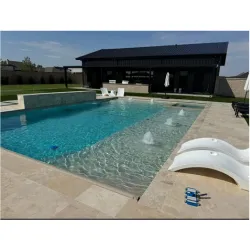
Travertine is a natural stone with a naturally light color and a textured surface, and it's a popular choice for pool decks in hot climates for good reason. Light tones reflect more sunlight than dark ones, and the stone tends to feel more comfortable underfoot than darker, denser materials on a hot day.
What's good:attractive, natural look; comfortable barefoot; slip-resistant texture when the right finish is chosen; works well as both decking and coping.
What to watch:it's a natural stone, so it should be properly sealed, and it needs a correctly built base to avoid cracking or shifting. If you're considering a saltwater system, ask your builder about stone and salt compatibility up front. Salt can be hard on unsealed natural stone, which we cover in oursaltwater vs. chlorine guide.
Option 2: Stamped and stained concrete
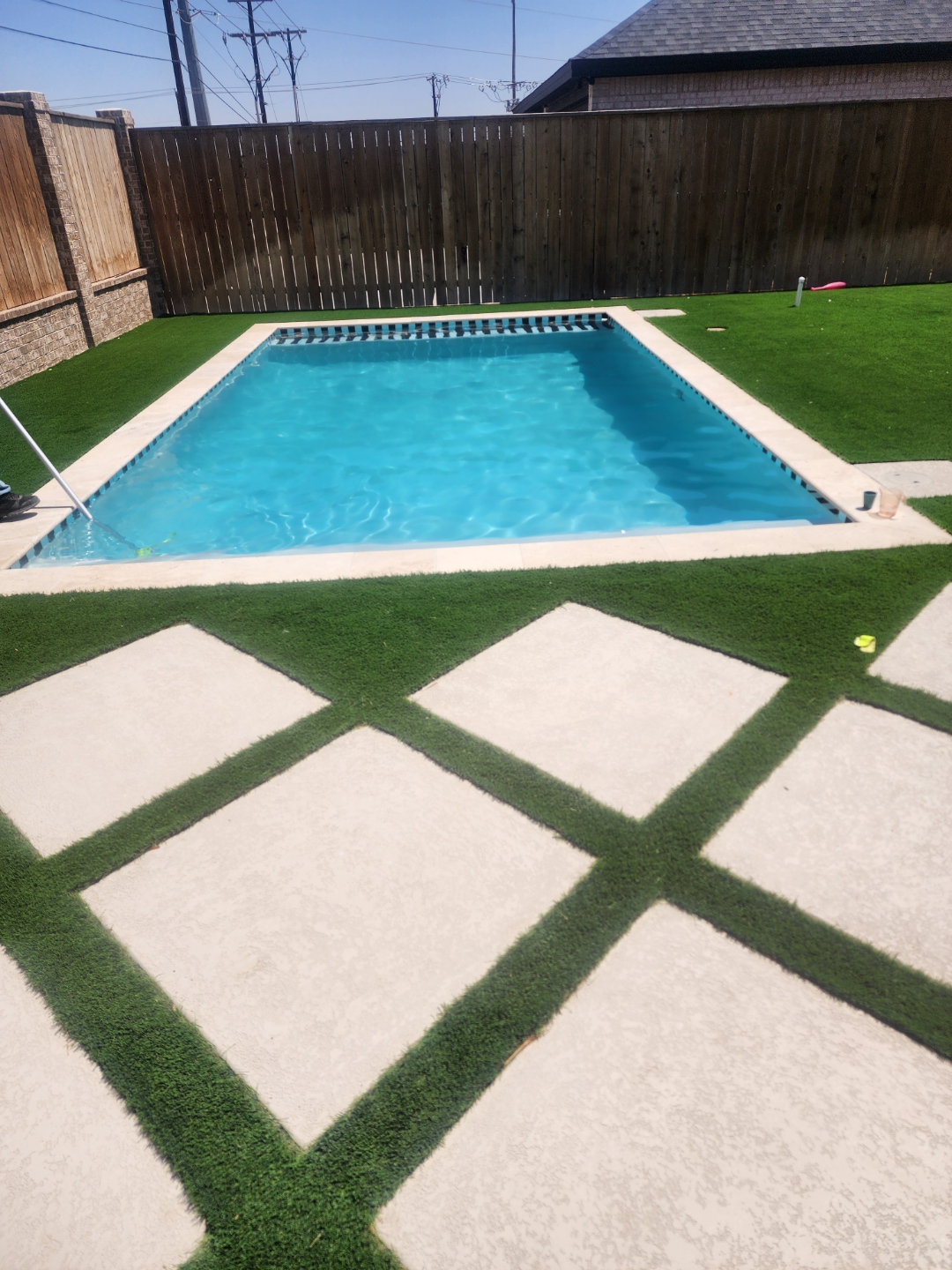
Concrete is the workhorse of pool decking, and stamping and staining let it imitate stone, brick, or tile at a more approachable price than the real thing. It's also very flexible: poured to fit any shape, and tied cleanly into the rest of a patio or walkway.
What's good:versatile, durable, and budget-friendly compared with natural stone; a huge range of patterns and colors; works well for large decks.
What to watch:color choice matters in this climate. Dark stains can run noticeably hotter underfoot than lighter ones. Concrete also needs control joints to manage cracking, and stamped and stained surfaces need periodic resealing to keep their color and resist wear.
Option 3: Flagstone
Flagstone gives you an irregular, natural look that suits a more organic, rustic backyard. Each piece is different, and the finished deck looks custom because it is.
What's good:distinctive natural character; durable; good texture for traction.
What to watch:installation is more labor-intensive, the surface can be uneven if not set carefully, and joints need proper filling and maintenance. Color matters here too, since darker flagstone will hold more heat than lighter varieties.
Quick comparison
Look | Barefoot comfort in summer | Upkeep | Best for | |
|---|---|---|---|---|
Travertine | Natural, refined | Generally good, especially lighter tones | Sealing; base prep is key | Upscale, resort-style backyards |
Stamped/stained concrete | Flexible: stone, tile, brick looks | Depends heavily on color | Periodic resealing | Larger decks, tighter budgets |
Flagstone | Rustic, one-of-a-kind | Depends on stone color | Joint upkeep | Natural, organic designs |
Exact cost and performance depend on the specific product, your layout, and site conditions, so treat this as a framework rather than a quote.
Five questions to ask before you choose
What color is it, and how does it feel at 3 p.m. in July?Ask to see and touch samples in direct sun.
What's underneath?Base preparation and drainage determine whether any deck lasts.
How is it sealed, and how often does it need resealing?
Is it compatible with my pool system?Especially if you're choosing saltwater.
Does the deck layout work with the rest of the yard?Walkways, shade, seating, and drainage should be designed together, not added later.
Design the deck with the pool, not after it
The best-looking, best-performing backyards plan the deck at the same time as the pool, so drainage, coping, steps, and traffic flow all work together. It's also easier on the schedule:permitting and inspectionsgo more smoothly when the whole project is planned as one.
If you already have a pool and the deck is what's tired (cracked concrete, a surface that's too hot, or a layout that no longer fits), a deck remodel can change how the entire backyard feels without touching the pool itself.
Talk to the builder who works here
Pina Pools designs and builds concrete, stamped, stained, flagstone, and travertine decks for pools across Odessa and Midland. Hector walks the yard with you, helps you pick a surface that holds up to West Texas summers, and gives you a straight number. You can see more on ourpool deck design page, orrequest a free, no-obligation estimate. For a sense of the overall budget, ourpool cost guideis a good companion read.
Frequently Asked Questions
What is the best pool deck material for hot weather?Lighter-colored surfaces generally stay more comfortable underfoot, and travertine is a popular choice in hot climates for that reason. Concrete and flagstone can work well too if you choose lighter colors and the right finish. Ask to test samples in direct afternoon sun.
Is travertine good for pool decks in Texas?Yes, it's a common choice. It should be properly sealed and installed over a well-prepared base, and you should confirm compatibility with your pool's sanitation system, particularly if you're using saltwater.
Can stamped concrete get too hot to walk on?It can, especially in darker colors. Choosing a lighter stain and surface texture makes a noticeable difference to barefoot comfort.
Do pool decks need to be sealed?Most natural stone and stamped or stained concrete decks benefit from sealing, and resealing periodically keeps color and protects against staining and wear. Your builder can recommend a schedule for the material you choose.
Can I replace just the deck and keep my existing pool?Yes. A deck remodel is a common project and can transform the look and feel of the backyard without touching the pool shell.
Does Pina Pools build pool decks?Yes. We design and build concrete, stamped, stained, flagstone, and travertine pool decks across Odessa, Midland, and the Permian Basin.
