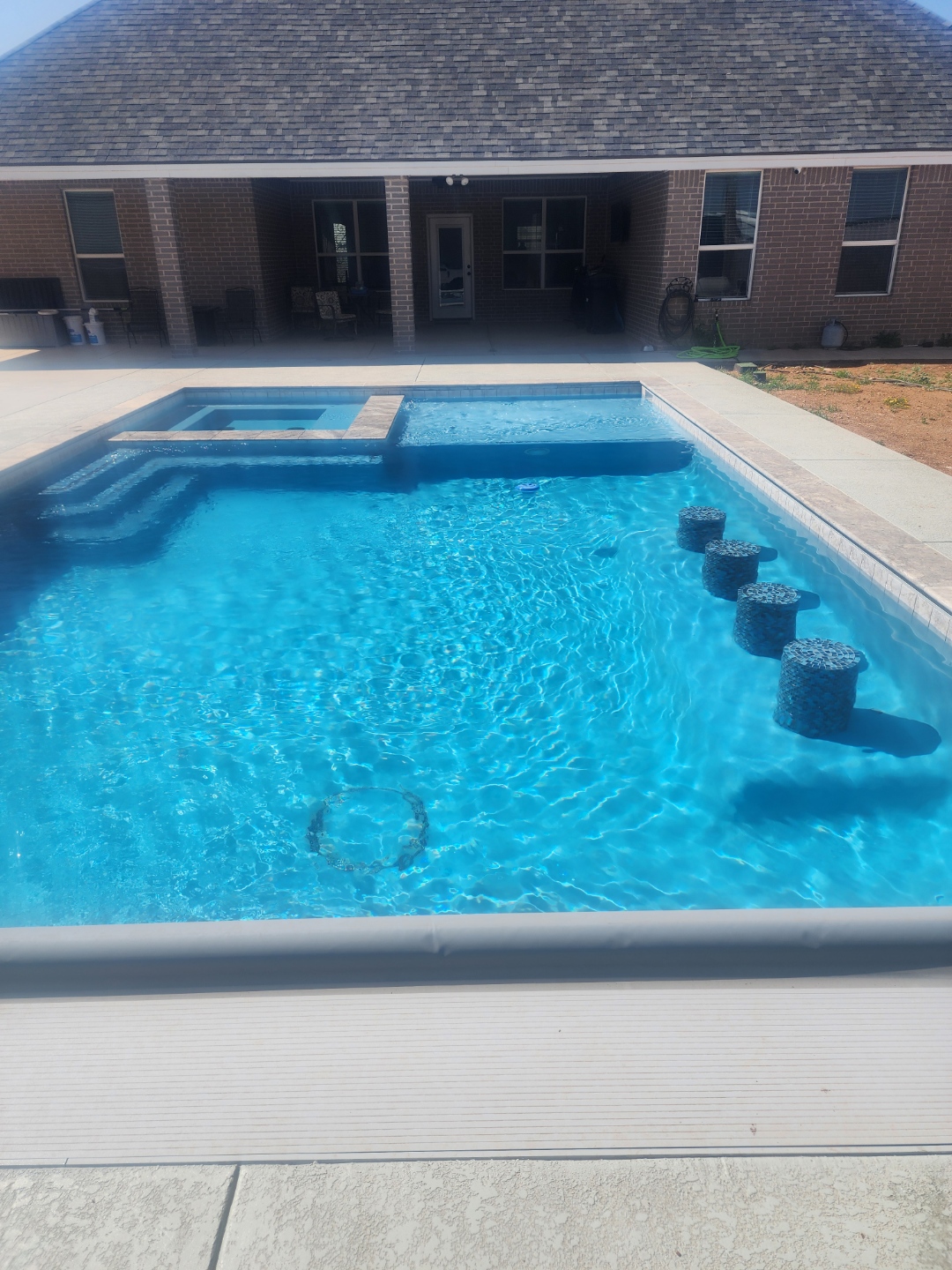
Gunite vs. Fiberglass vs. Vinyl: Which Pool Is Right for West Texas?
Gunite vs. Fiberglass vs. Vinyl: Which Pool Is Right for West Texas?
Before you can get a real number for your backyard, you have to answer a bigger question first: what kind of pool are you actually building?
There are three main options — gunite, fiberglass, and vinyl liner — and every online guide will tell you their general pros and cons. What most of them won't tell you is which one actually makes sense in Odessa, Midland, and the rest of the Permian Basin, where the ground, the water, and the weather all play by their own rules.
Here's the honest breakdown, from a crew that's built all three kinds of backyards and lives with the same water and soil you do. If you haven't already, it's worth reading our guide on what a pool actually costs in Odessa and Midland alongside this one — cost and pool type are two sides of the same decision.
The three options, in plain terms
Gunite (concrete)is sprayed on-site over a steel rebar frame, then finished with plaster, quartz, or pebble. It's built in place, which means it can be built into almost any shape, size, or feature you can picture.
Fiberglasspools are a single pre-molded shell, manufactured off-site and dropped into an excavated hole. They come in a fixed set of shapes and sizes.
Vinyl linerpools use a steel or polymer frame with a custom-fitted liner stretched over it to hold the water. The liner itself needs replacing every 7 to 15 years.
Each one is a completely different system — not just a different finish — so the trade-offs run deeper than looks.
Cost
By initial investment, vinyl typically comes in lowest, fiberglass in the middle, and gunite highest. But "lowest cost" isn't the same as "lowest cost over time" — a vinyl liner is a recurring expense every decade or so, while a well-built gunite pool's biggest expense after the build is periodic resurfacing every 7 to 15 years, not a full liner replacement.
If you want the detailed number breakdown for our area specifically, that's covered in ourpool cost guide for Odessa and Midland.
Installation time
This is where fiberglass and vinyl clearly win. A fiberglass shell can go in within a couple of weeks once the hole is dug, and vinyl liner pools move fast too. Gunite takes longer — commonly 8 to 16 weeks from dig to completion, because the shell is built in place and needs time to cure properly before finishing.
That timeline isn't a downside so much as a trade-off: gunite takes longer because it's being built to your yard, not pulled off a shelf.
Customization
Fiberglass pools are limited to the shapes and sizes a manufacturer has already molded. Vinyl liner pools allow more flexibility than fiberglass — different step layouts, depth changes, attached spa sections — but still work within a frame system. Gunite is the only one of the three with essentially no shape limit: tanning ledges, attached spas, water features, custom depths, and one-of-a-kind layouts are all on the table because the pool is built, not dropped in.
If you're picturing a pool that matches your yard exactly rather than the closest shape available, gunite is usually the answer.
Durability and lifespan
A well-built gunite pool is the longest-lasting of the three, commonly rated at 30+ years of structural life with periodic resurfacing along the way. Fiberglass shells are also durable and resist algae well thanks to their smooth, non-porous surface. Vinyl liners are the shortest-lived component in any pool system — even a well-maintained liner is a wear item that gets replaced on a schedule, not a one-time build.
Maintenance
Fiberglass's smooth surface means it fights algae growth better and generally needs less scrubbing and fewer chemicals than a gunite pool's slightly porous surface. Gunite pools benefit from a regular brushing routine to stay ahead of buildup — not a dealbreaker, just part of pool ownership. Vinyl liners are gentle on bare feet and low on texture-related maintenance but require care to avoid punctures and tears.
What actually matters in the Permian Basin
Here's the part that's specific to us, not a national guide:
Hard water.Our water is tough on interior finishes and equipment regardless of pool type, but it's a bigger factor for plaster longevity in gunite pools and worth planning for with the right finish and water chemistry from day one.
Caliche soil.Excavation in caliche is more involved than in soft soil, and it affects every pool type's install — but it's a bigger cost swing for a poured, in-place gunite build than for a pre-formed fiberglass shell, simply because more excavation work touches more of the total bill.
Heat and freeze swings.Triple-digit summers and occasional January freezes both stress a pool's structure and plumbing. A gunite pool built with West Texas freeze-thaw and heat cycles in mind holds up to both; the same is true of a properly winterized vinyl or fiberglass system. The pool type matters less here than whether the builder actually accounted for our climate.
So which one should you build?
If you want a pool custom-shaped to your exact yard, expect to stay in the home for years, and want the longest-lasting structure —gunite is the right call, and it's what we specialize in.
If speed of installation matters more than full customization, and a set of standard shapes works for your space, fiberglass is a reasonable option. Vinyl liner can make sense for homeowners prioritizing the lowest upfront cost and comfortable with a recurring liner replacement down the road.
There's no universally "best" pool — there's the best pool for your yard, your budget, and how long you plan to enjoy it. That's a conversation, not a blog post.
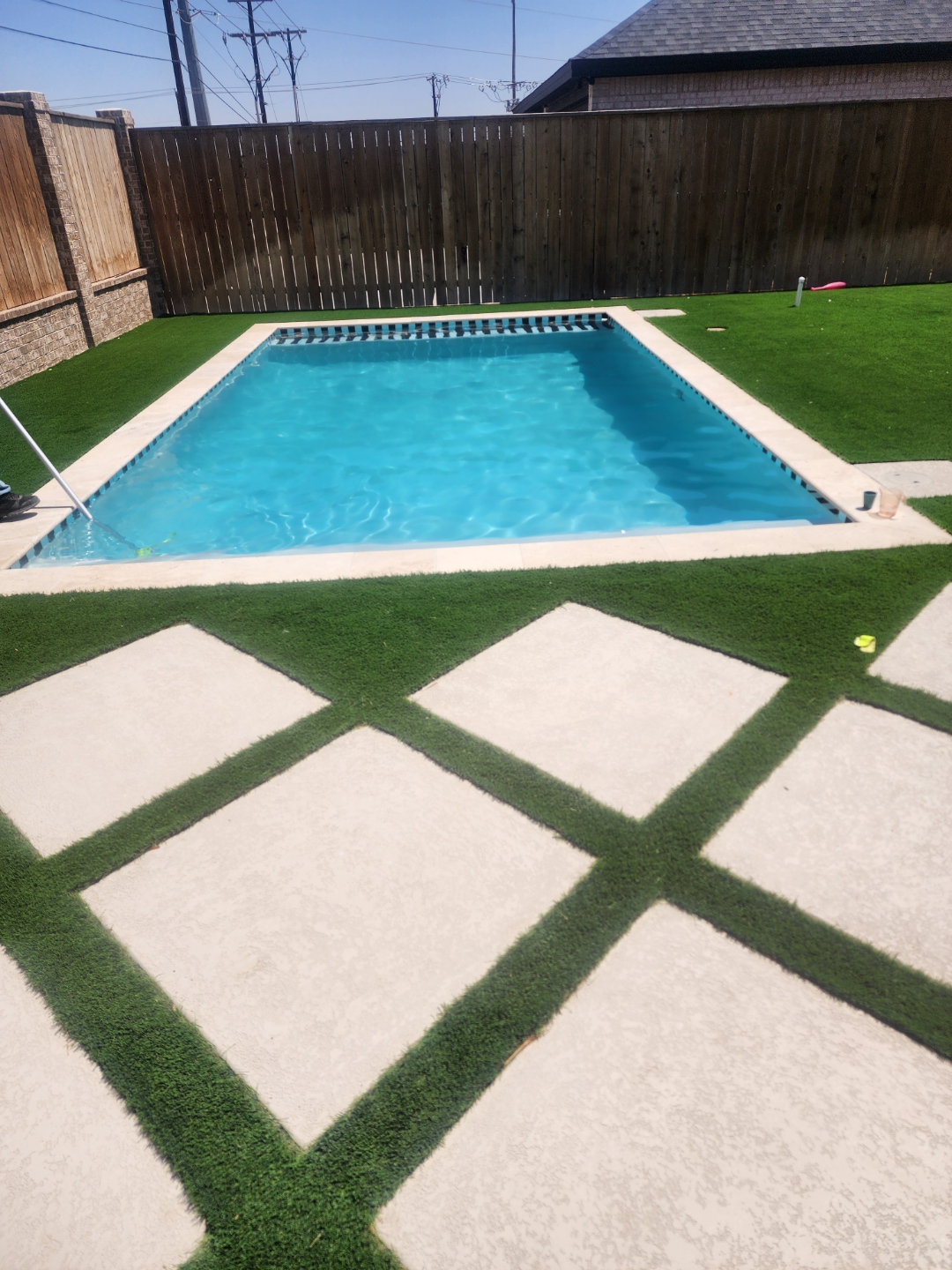
Talk to a builder who actually works here
Pina Pools has been building gunite pools in Odessa and Midland since the 1970s. Hector runs every job personally, and we'll always tell you honestly whether a project fits gunite, or whether your budget and timeline point somewhere else. Financing is available through Lyon Financial if cost is the deciding factor.
Ready to talk about your yard?Get a free, no-obligation estimate, orexplore our custom gunite pool buildsto see what's possible in Odessa, Midland, and the surrounding Permian Basin.
Frequently Asked Questions
Is gunite better than fiberglass for a Texas pool?Gunite offers more customization and a longer structural lifespan, while fiberglass installs faster and requires less routine maintenance. For a fully custom pool you plan to keep for decades, gunite is generally the stronger long-term investment.
How long does a vinyl liner last?A vinyl pool liner typically lasts 7 to 15 years before it needs replacing, even with good maintenance. This is a recurring cost to plan for over the life of the pool.
Which pool type handles West Texas heat and caliche soil best?All three pool types can be built successfully here, but the builder's experience with local soil and water conditions matters more than the pool type itself. A gunite pool built by a crew that understands caliche excavation and hard water will outperform any pool type built without that knowledge.
Does Pina Pools build fiberglass or vinyl pools?Pina Pools specializes in custom gunite pools, spas, and decks, built in place and designed around your yard. We'll always give you an honest read on whether gunite fits your project and budget.
